Tiger Woods Accident: Experts Analyze Possible Causes
On a fateful morning in late February, the sports world held its breath as news broke of a severe car accident involving golfing icon Tiger Woods. The incident, which occurred near Los Angeles, left the legendary athlete with serious injuries and ignited a widespread investigation into its possible causes. While the initial shock has subsided, the detailed analysis by accident reconstruction experts continues to provide insights into the events leading up to what many describe as a miraculous survival.
The Incident Unfolds: A Brush with Catastrophe
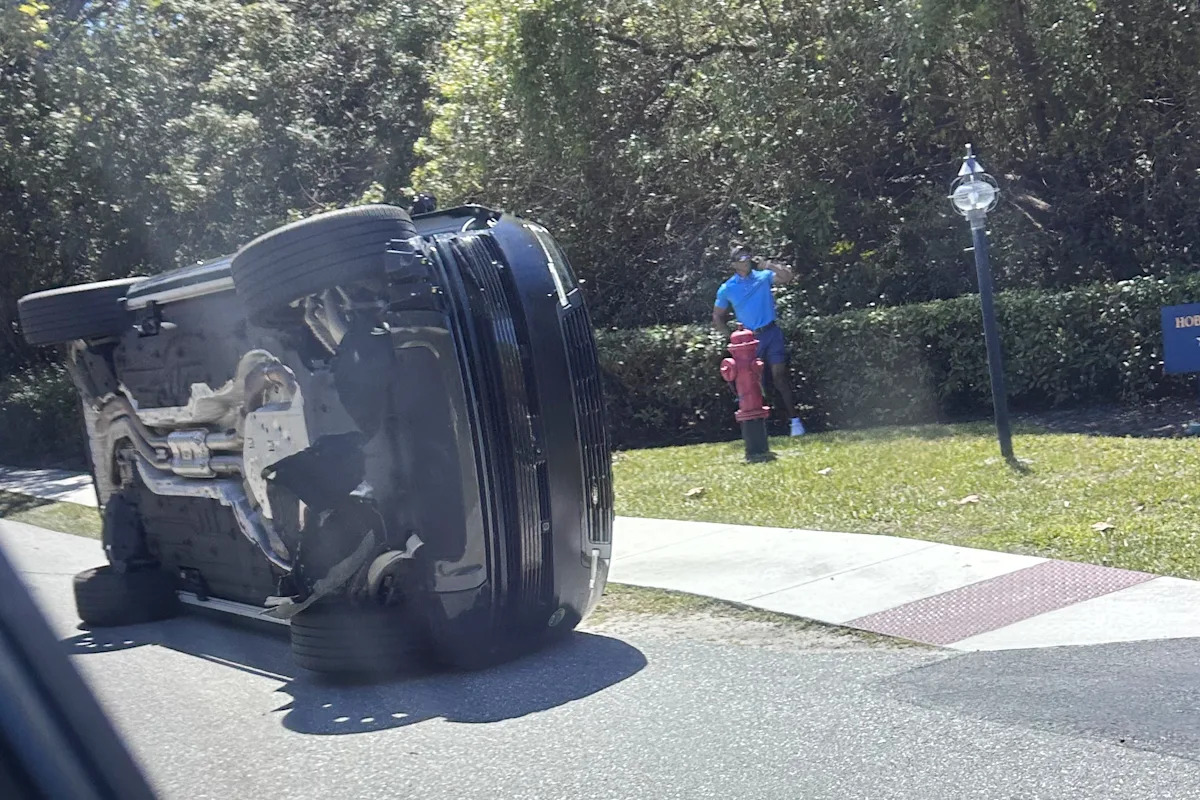
Just after 7 a.m. on Tuesday, February 23rd, Tiger Woods was driving in Rancho Palos Verdes, an area known for its winding, downhill roads. His vehicle, a Genesis GV80 SUV, veered off its path, crossing the central reservation, traversing two opposing lanes of traffic, striking a curb and a tree, and ultimately rolling before coming to rest on its side in nearby bushes. Despite the extreme force of the impact and the dramatic sequence of events, no other vehicles were involved in the solo crash.
When rescue crews arrived at the scene, Woods was conscious and lucid, a testament to his resilience and potentially the safety features of his vehicle. However, the severity of the wreckage necessitated the use of specialized tools, including a pry bar and an axe, to extract him from the mangled SUV. He was immediately transported to Harbor-UCLA Medical Center, where he underwent extensive leg surgery.
Updates from his social media account later confirmed the extent of his injuries: Woods suffered open fractures to both the fibula and tibia in his right leg, along with significant ankle bone damage and muscle trauma. The complex surgical procedure involved inserting a rod into his tibia, along with screws and pins to stabilize other bone fragments and relieve pressure on the muscle and soft tissue. The road to recovery for an athlete of his caliber with such profound injuries is undoubtedly long and challenging, as further detailed in Tiger Woods Suffers Serious Leg Injuries in LA Crash.
Deciphering the Wreck: Experts Weigh In on Possible Causes
The immediate aftermath of the Tiger Woods car accident today sparked intense speculation regarding its origins. Investigators meticulously examined the crash site, and independent accident reconstruction experts were quick to offer their professional assessments. Despite the lack of definitive conclusions from official sources, a consensus began to emerge among these specialists.
A leading theory, widely supported by expert analysis, suggests that Woods most likely either fell asleep at the wheel or experienced a medical condition that rendered him unconscious moments before the vehicle veered off course. Jonathan Cherney, a forensic accident reconstruction expert, succinctly articulated this perspective, stating, "To me, this is like a classic case of falling asleep behind the wheel, because the road curves and his vehicle goes straight." This observation is critical; the absence of skid marks indicating braking, coupled with the vehicle's trajectory directly across the curve, strongly points away from evasive maneuvers or conscious control at the moment of impact.
Drowsy driving is a far more prevalent and dangerous issue than many realize, often leading to accidents with similar characteristics to Woods' crash. Micro-sleeps, momentary lapses of consciousness, can occur without warning, leaving drivers momentarily blind and unresponsive. A medical emergency, such as a sudden seizure or a fainting spell, could also explain the lack of driver input. While officials confirmed that weather conditions played no part in the incident, the focus remains squarely on the driver's state.
Practical Tips for Preventing Drowsy Driving:
- Get Adequate Rest: Aim for 7-9 hours of sleep before a long drive.
- Take Breaks: Stop every two hours or 100 miles to stretch, walk, or grab a coffee.
- Avoid Driving During Peak Drowsiness: For most people, this is between midnight and 6 a.m., and in the mid-afternoon.
- Travel with a Companion: A passenger can help keep you awake and can take over driving if needed.
- Recognize Warning Signs: Frequent yawning, heavy eyelids, trouble remembering the last few miles driven, or drifting from your lane are all red flags. Pull over safely and rest.
The Perilous Stretch and Prior Incidents
The segment of Hawthorne Boulevard in Rancho Palos Verdes where Woods crashed is notoriously dangerous. Los Angeles County Sheriff Alex Villanueva highlighted its reputation, noting that in January alone, there had been 13 car accidents on this downhill, winding stretch of road. This background knowledge underscores the inherent risks even for alert drivers navigating such terrain, let alone those who might be impaired or incapacitated.
Interestingly, this was not Tiger Woods' first significant car incident. More than a decade prior, in November 2009, Woods was involved in another single-vehicle accident near his Florida home. In that incident, his Cadillac Escalade struck a fire hydrant and then a tree after pulling out of his driveway. His then-wife, Elin Nordegren, notably used a golf putter to break a rear window and pull him from the SUV. While he sustained lacerations and was in and out of consciousness, his injuries were far less severe, and the vehicle damage was limited to the front end, leaving the SUV drivable. This prior incident, while distinct in its circumstances and severity, highlights a pattern of solitary vehicle accidents, although the causes in each case were different.
The stark contrast between the Florida and LA crashes emphasizes the sheer brutality of the Rancho Palos Verdes event. The extensive damage to the Genesis GV80, the need for specialized rescue equipment, and the severity of Woods' injuries all point to an impact of immense force. The fact that he survived this specific accident, given the road's reputation and the nature of the crash, truly emphasizes the discussion around Rancho Palos Verdes Crash: Why Woods Survived the Danger.
The Aftermath: Investigation, Recovery, and a Miraculous Survival
Despite the ongoing investigation and the numerous theories, Sheriff Villanueva quickly clarified that no criminal charges would be pursued against Woods. He stated, "We don’t contemplate any charges whatsoever in this crash. This remains an accident. An accident is not a crime. They do happen, unfortunately." This decision underscores that while the accident was severe, it lacked the elements of criminal intent or severe negligence that would warrant legal action beyond the investigation of its causes.
Villanueva himself, after personally visiting the crash site, described Woods' survival as "nothing short of a miracle." This sentiment resonated widely, considering the extent of the vehicle damage, the dangerous road conditions, and the potential for far more tragic outcomes. Modern vehicle safety features, including multiple airbags, advanced crumple zones, and a robust passenger compartment, likely played a critical role in mitigating the impact and creating a "survival space" around the driver.
Woods' recovery journey is expected to be extensive, potentially sidelining him from professional golf for a considerable period, if not permanently altering his career trajectory. His dedication to rehabilitation will be crucial in overcoming such severe leg and ankle trauma.
Conclusion
The Tiger Woods car accident, particularly the one near Los Angeles, stands as a stark reminder of the unpredictable nature of road travel and the critical importance of driver awareness. While the official investigation into the exact cause remains open, expert analysis strongly points towards driver incapacitation, whether due to sleep or a medical condition, given the vehicle's uncontrolled trajectory. The incident also shed light on the inherent dangers of specific road sections and the incredible engineering that can contribute to survival in severe crashes. Woods' resilience and the "miraculous" outcome serve as both a testament to his fighting spirit and a wake-up call for all drivers to prioritize rest, vigilance, and safety on our roads.